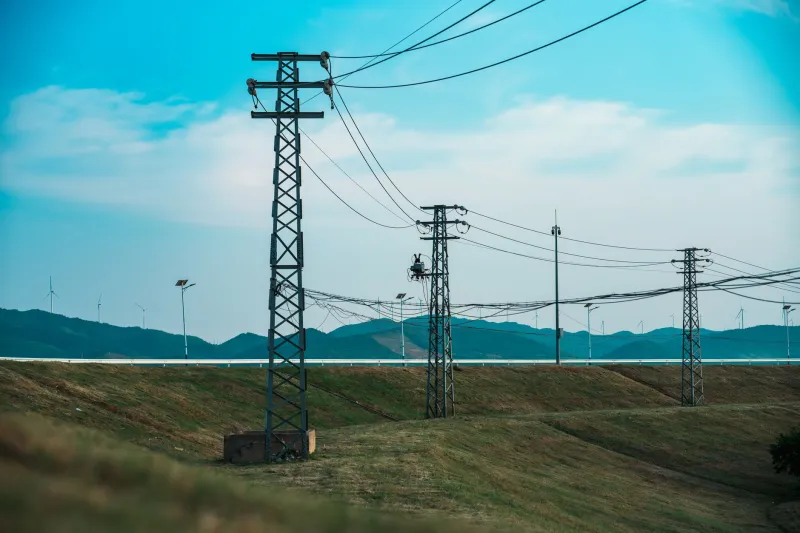
Miles Matter: Quantifying the Efficiency Losses Wind Farms Absorb Before Power Reaches the Grid
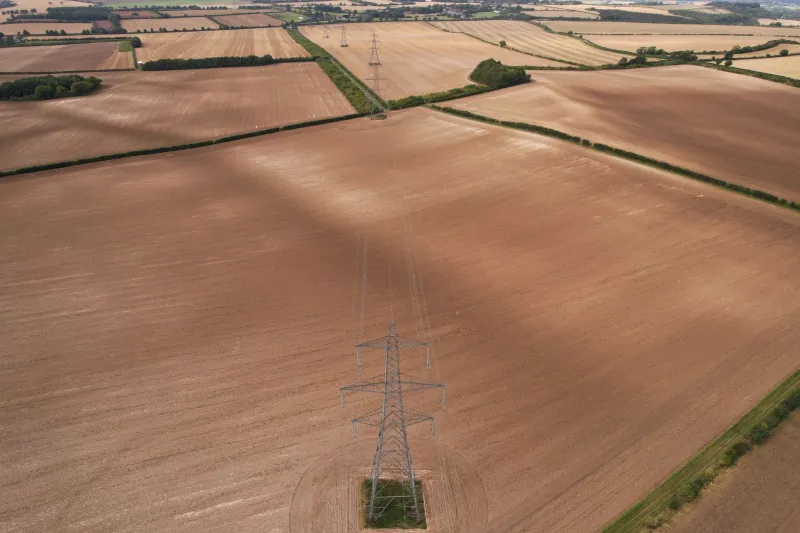
When analysts evaluate a wind farm's output, the conversation typically centers on capacity factors, turbine availability, and prevailing wind resources. These are legitimate performance indicators. But they share a common blind spot: they measure what a facility generates, not what ultimately reaches consumers. Between those two figures lies a gap that transmission infrastructure—and its many inefficiencies—quietly widens every hour of every day.
For wind projects across the American interior, that gap is not trivial. The most productive wind corridors in the United States—West Texas, the Wyoming Basin, the Dakotas—are also among the most geographically isolated. Power generated hundreds of miles from Dallas, Denver, or Minneapolis must traverse aging high-voltage lines, congested interchange points, and regulatory boundaries before it can be counted as useful energy delivery. Each stage of that journey carries a cost, and those costs accumulate in ways that standard performance reporting rarely captures.
Resistive Losses: The Physics of Long-Distance Power Transfer
Electricity moving through a conductor encounters resistance. That resistance converts some fraction of the transmitted energy into heat, a phenomenon described by Joule's first law. The practical consequence is straightforward: the farther power travels, the more of it disappears before arrival.
High-voltage alternating current (HVAC) transmission lines, which carry the bulk of US wind energy, operate at voltages between 115 kilovolts and 765 kilovolts. Higher voltages reduce resistive losses proportionally, which is why long-distance transmission relies on step-up transformers at the generation site. Even so, the US Energy Information Administration estimates that transmission and distribution losses across the national grid average roughly 5 percent of total electricity generated. For wind projects situated at the outer edges of transmission infrastructure, project-specific losses can run considerably higher.
High-voltage direct current (HVDC) lines offer a more efficient alternative for very long corridors, with losses approximately 30 to 40 percent lower than comparable HVAC systems over distances exceeding 300 miles. Several proposed US transmission projects—including the SunZia Wind and Transmission Project running from New Mexico into Arizona—are pursuing HVDC specifically to reduce these dissipation penalties. The capital costs, however, are substantially greater, and those costs factor directly into a project's levelized cost of energy (LCOE) and its long-term performance economics.
Congestion Charges and Locational Marginal Pricing
Beyond resistive losses, wind farms operating within organized wholesale markets face a second category of transmission penalty: congestion pricing. Regional transmission organizations (RTOs) such as MISO, SPP, and ERCOT use locational marginal pricing (LMP) to reflect real-time grid conditions at specific nodes. When transmission lines between a generation node and a load center approach capacity, prices at the generation node can drop sharply—sometimes to near zero or even negative values—while prices at the load node remain elevated.
For a wind farm, this divergence between generation-node and load-node prices represents a direct revenue loss. The facility is producing power, but the grid cannot efficiently deliver it, and the market pricing mechanism penalizes the generator accordingly. In heavily congested corridors—particularly in West Texas, where ERCOT has documented persistent negative pricing events during high-wind periods—these congestion-related revenue reductions can materially alter a project's financial performance relative to its modeled projections.
This dynamic also creates a counterintuitive situation: a wind farm may record strong capacity factor performance while simultaneously experiencing weak revenue realization. Output metrics and financial metrics diverge, and neither fully captures the project's effective contribution to grid-level energy delivery.
Curtailment as a Transmission Symptom
When congestion becomes severe enough, grid operators move beyond pricing adjustments and instruct generators to reduce or halt output entirely. This forced curtailment is, in transmission-constrained markets, less a reflection of insufficient demand than of insufficient delivery infrastructure.
The American Wind Energy Association (now part of the American Clean Power Association) documented curtailment rates exceeding 15 percent in parts of Texas during periods of peak wind generation and constrained export capacity. MISO has reported similar patterns in the Upper Midwest, where wind-rich states like Iowa and Minnesota generate more power than existing east-west transmission corridors can export during certain operating conditions.
Curtailment directly reduces a wind farm's effective capacity factor below its meteorological potential. A site with a resource-based capacity factor of 42 percent may post an actual delivered capacity factor of 36 percent once curtailment hours are accounted for. That six-percentage-point difference represents lost generation, foregone revenue, and, from a grid perspective, renewable energy that was available but never utilized.
Interconnection Queues and the Pre-Operational Penalty
Transmission constraints also impose efficiency costs before a project generates its first kilowatt-hour. The interconnection queue process—through which developers secure a formal grid connection—has grown increasingly congested across all major US RTOs. Lawrence Berkeley National Laboratory's 2023 Queued Up report found that more than 2,000 gigawatts of proposed generation capacity sat in interconnection queues nationally, with wind projects representing a substantial portion.
Lengthy queue timelines delay project commissioning, sometimes by four to six years. During that period, modeled wind resource assumptions may diverge from actual conditions, financing costs accumulate, and turbine technology continues to advance—meaning projects enter service with equipment that may already be a generation behind the current state of the art. The transmission system's capacity to absorb new wind generation shapes not only operating efficiency but the pace at which the US fleet can be modernized.
Evaluating True Delivered Performance
For analysts and investors seeking an accurate picture of wind farm performance, nameplate capacity and even standard capacity factor calculations are insufficient on their own. A more complete assessment incorporates transmission loss factors applied at the project's specific grid node, historical congestion frequency and magnitude along relevant export corridors, curtailment rates drawn from SCADA data or RTO settlement records, and interconnection cost allocations that reflect the true infrastructure burden borne by the project.
Some developers and independent power producers have begun publishing delivered energy figures—power actually settled at the load-serving node rather than at the generation busbar—as a more transparent performance metric. This approach aligns reported output with the energy that consumers and utilities actually receive, and it surfaces the transmission penalty in terms that financial models can directly incorporate.
Why Location Remains a Foundational Performance Variable
Turbine technology has advanced substantially over the past decade. Taller towers access stronger, more consistent wind shear. Longer blades sweep greater rotor areas. Advanced control algorithms optimize yaw and pitch response in real time. These engineering improvements genuinely raise the ceiling on what a modern wind facility can generate.
But no amount of turbine sophistication eliminates the physics of transmission distance or the market mechanics of grid congestion. A technologically superior turbine installed in a transmission-constrained location will consistently underperform a comparable unit sited closer to load, all else being equal. Location is not merely a development consideration; it is a performance variable that operates continuously across the life of the asset.
For the US wind industry to realize the full efficiency potential of its expanding generation fleet, infrastructure investment must keep pace with generation capacity additions. Transmission planning that accounts for the geographic distribution of the country's best wind resources—rather than reacting to it after the fact—is a prerequisite for converting nameplate capacity into reliably delivered power.