Paid to Stand Down: The Economics of Wind Energy Curtailment and America's Grid Bottleneck Problem
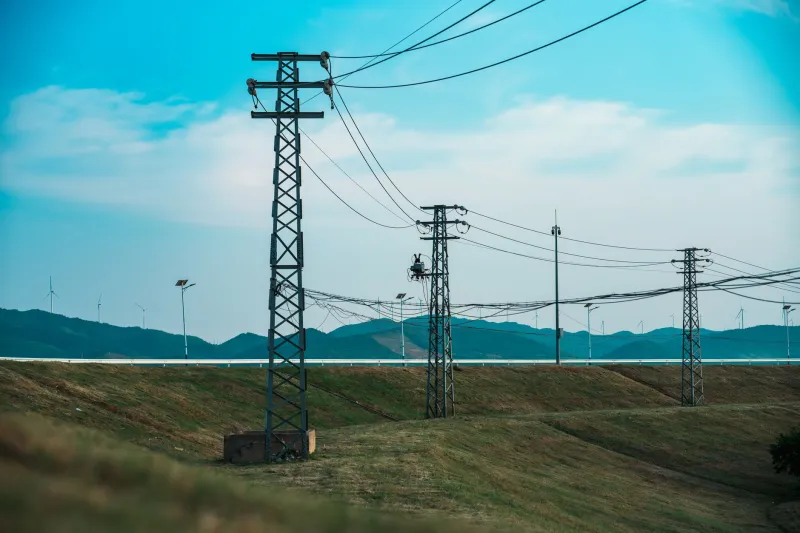
There is something deeply paradoxical about paying a power plant not to generate electricity during ideal operating conditions. Yet across American wind energy markets, this is not an anomaly—it is a recurring, measurable, and increasingly expensive feature of how the grid functions. The practice is known as curtailment, and its prevalence challenges the straightforward narrative that more wind capacity automatically translates into more clean energy delivered to consumers.
For analysts and operators focused on wind farm performance metrics, curtailment represents one of the most consequential gaps between theoretical output and actual generation. It is a performance drag that does not originate in turbine engineering or meteorological variability, but in the structural limitations of the systems designed to move electricity from where it is produced to where it is consumed.
What Curtailment Actually Means in Practice
Wind curtailment occurs when a grid operator—typically a Regional Transmission Organization (RTO) or Independent System Operator (ISO)—instructs a wind facility to reduce its output below what the wind resource would otherwise support. The turbines are operational. The wind is blowing. The mechanical capacity exists to generate power. But the grid cannot accept it, and so the energy is effectively discarded.
Curtailment instructions can be issued for several distinct reasons. Transmission congestion is the most common: when more electricity is being generated in a given region than the available transmission lines can physically carry toward load centers, operators must reduce supply somewhere. Wind farms, which frequently cluster in remote areas with limited grid connectivity, are disproportionately affected. Voltage stability requirements, frequency regulation constraints, and minimum generation mandates for thermal plants can also trigger curtailment orders under specific grid conditions.
The financial mechanism is equally counterintuitive. In many market structures, curtailed wind generators receive compensation—either through capacity payments, negotiated curtailment agreements, or, in some cases, negative pricing arbitrage. Wind facilities with production tax credit eligibility may actually find it economically rational to pay the grid to accept their electricity when prices go negative, because the federal credit value exceeds the cost of the payment. This dynamic, while rational at the individual plant level, represents a systemic distortion that imposes costs across the broader market.
Regional Transmission Data: Where the Losses Are Concentrated
The scale of curtailment across US markets is not trivial. ERCOT, the Texas grid operator, has historically reported some of the highest absolute curtailment volumes in the country, a consequence of rapid wind capacity expansion outpacing transmission buildout in West Texas and the Panhandle. In peak curtailment years, ERCOT recorded losses exceeding 10 terawatt-hours annually—energy that was generated by the wind resource but never delivered to consumers.
SPP, the Southwest Power Pool, has faced analogous challenges across its multi-state footprint in the central United States, where wind resources are abundant but transmission corridors connecting generation hubs to population centers remain constrained. MISO, covering a broad swath of the Midwest, has documented curtailment patterns concentrated in its northern and western zones, where Canadian interconnections and local congestion create recurring bottlenecks.
The capacity factor implications are significant. A wind farm operating in a high-curtailment environment may achieve a raw capacity factor—based on actual generation versus nameplate capacity—that substantially understates what the wind resource itself would support. Analysts distinguishing between "available" and "actual" capacity factors can identify facilities where curtailment, rather than wind variability, is the primary performance constraint. This distinction matters enormously for asset valuation, investment decisions, and policy evaluation.
The Transmission Gap: Infrastructure Built for a Different Era
The United States' high-voltage transmission network was largely designed around a centralized generation model—large thermal plants located near fuel sources or population centers, feeding power outward through a hub-and-spoke topology. Wind energy, by contrast, is geographically determined. The strongest, most consistent wind resources in the continental US are concentrated in the Great Plains corridor, the Gulf Coast, and portions of the Mountain West—regions that are, by definition, distant from major load centers on the coasts and in the industrial Midwest.
Expanding transmission capacity to resolve this geographic mismatch is technically straightforward but institutionally and financially complex. Transmission projects require multi-jurisdictional permitting, cost allocation agreements among states that may not directly benefit from the new capacity, and long development timelines that frequently exceed a decade from planning to energization. The result is a persistent lag in which wind generation capacity grows faster than the infrastructure needed to deliver it.
Some RTOs have pursued coordinated transmission planning initiatives specifically designed to address renewable integration constraints. MISO's long-range transmission planning process and SPP's transmission expansion protocols represent attempts to align infrastructure investment with the geographic reality of wind resource distribution. Progress, however, has been uneven, and the backlog of unresolved congestion points remains substantial.
Market Signals and the Negative Price Problem
Negative wholesale electricity prices—a condition in which generators effectively pay to inject power into the grid—have become an increasingly common feature of markets with high wind penetration. When generation supply exceeds demand and transmission constraints prevent power from flowing to regions where it is needed, locational marginal prices at constrained nodes can fall sharply, sometimes deeply into negative territory.
For wind operators, negative prices create a difficult calculus. Shutting down avoids the cost of paying to generate, but sacrifices production tax credit earnings tied to actual generation. Continuing to operate captures the credit value but imposes real-time costs. The optimal strategy depends on contract structure, credit eligibility, and the depth and duration of the negative price event.
From a system-wide performance perspective, negative pricing episodes are diagnostic indicators of curtailment pressure. They signal that the grid's ability to absorb renewable generation has reached a binding constraint—that the physical and market architecture is failing to translate available wind energy into productive economic output.
Quantifying the Hidden Performance Cost
For performance analysts, integrating curtailment into wind farm evaluation requires moving beyond generation data alone. Curtailment volumes, when disclosed, allow calculation of what NERC and many RTOs term the "curtailment rate"—curtailed energy as a percentage of available generation. Facilities with curtailment rates above five percent warrant scrutiny of their grid interconnection position and transmission queue status.
The aggregate economic cost of curtailment across US wind markets is difficult to estimate precisely, but conservative calculations based on available RTO curtailment data and average wholesale price assumptions suggest annual losses in the hundreds of millions of dollars across the industry—losses that represent both foregone revenue for project owners and clean energy that was never delivered despite being technically available.
Addressing curtailment at scale requires simultaneous progress on transmission expansion, grid flexibility improvements, and market rule reforms that reduce the structural incentives for negative pricing distortions. Until those systemic changes materialize, curtailment will remain a persistent drag on the performance metrics that define American wind energy's real-world contribution to the nation's energy supply—a reminder that capacity installed is not the same as capacity utilized.